Perimeter line and surface conditions
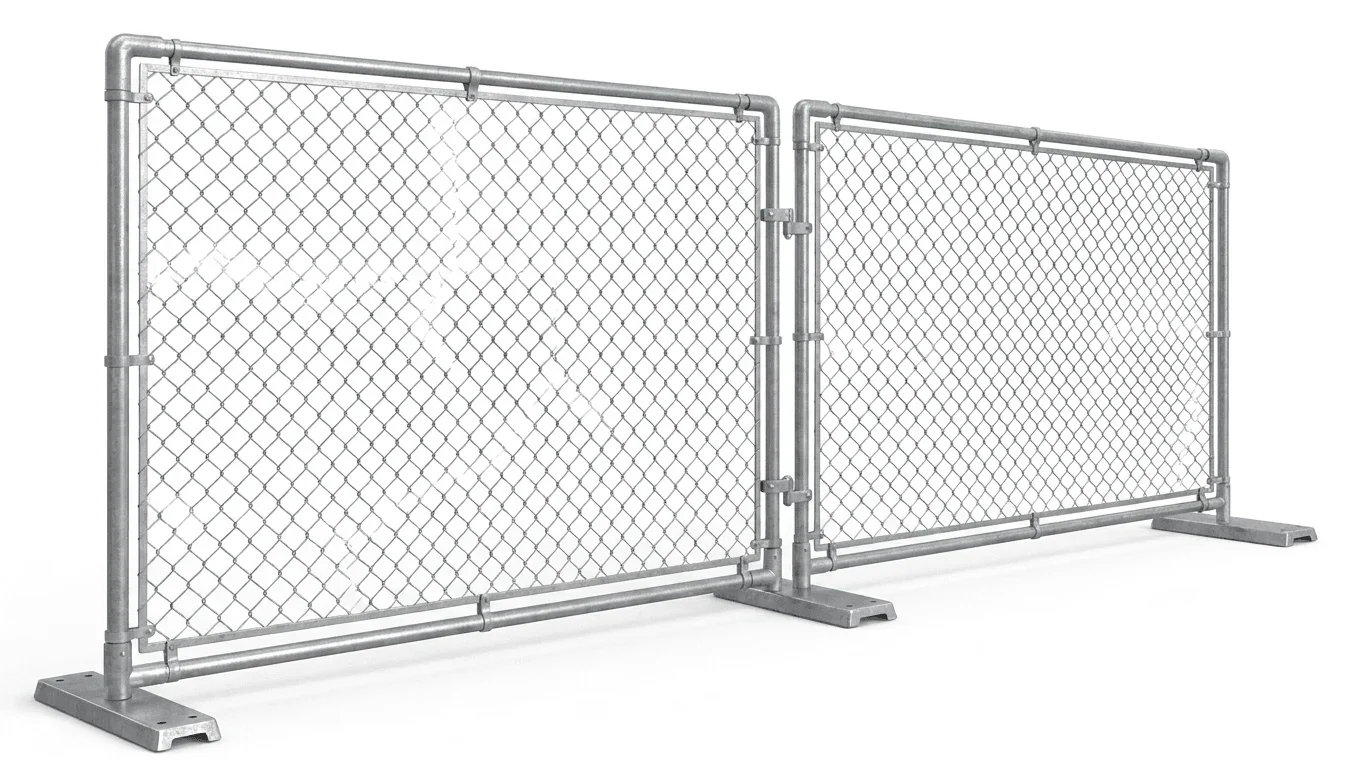
Panel fencing on pavement behaves differently than on grass or compacted clay. On slab, base weights and stable footing keep lines straight. On unpaved ground, panel spacing, bracing style, and base footprint help resist tilt when the soil softens.
Consider: - Line length and number of turns around obstacles - Slope segments where downhill tension can rack panels - Drainage paths that may undercut bases during heavy rain
Public-facing segments vs. work-yard edges
Barricades for pedestrians near campuses and government corridors need tighter spacing and clear sightlines. In work yards, broader spacing is acceptable, but gate placement must fit delivery trucks and lift equipment without repeated rework after storms.
Gates, staging, and rerouting
Tallahassee jobs often phase around events or semester calendars. Plan for relocations by breaking long runs into sections with intermediate gates. Identify hard points on pavement where heavier bases or anchored sections are appropriate, while allowing lighter sections to flex around soft ground.
Pairing with site products and lifts
- For material drops and container yards: see /storage-containers-rental/
- Night work or early-morning setups: see /generators-light-towers-rental/
- Overhead maintenance near fenced areas: compare /vertical-mast-lift-rental/ for tight interiors and /articulating-boom-lift-rental/ for reach over obstacles
Tallahassee notes
Rolling grades create uneven panel loads, especially along cuts and swales. After rain, clay loses shear strength; wider bases and conservative gate placement reduce mid-project adjustments.